



Celestron Origin Mark II 12100
£3,999.00 VAT inc
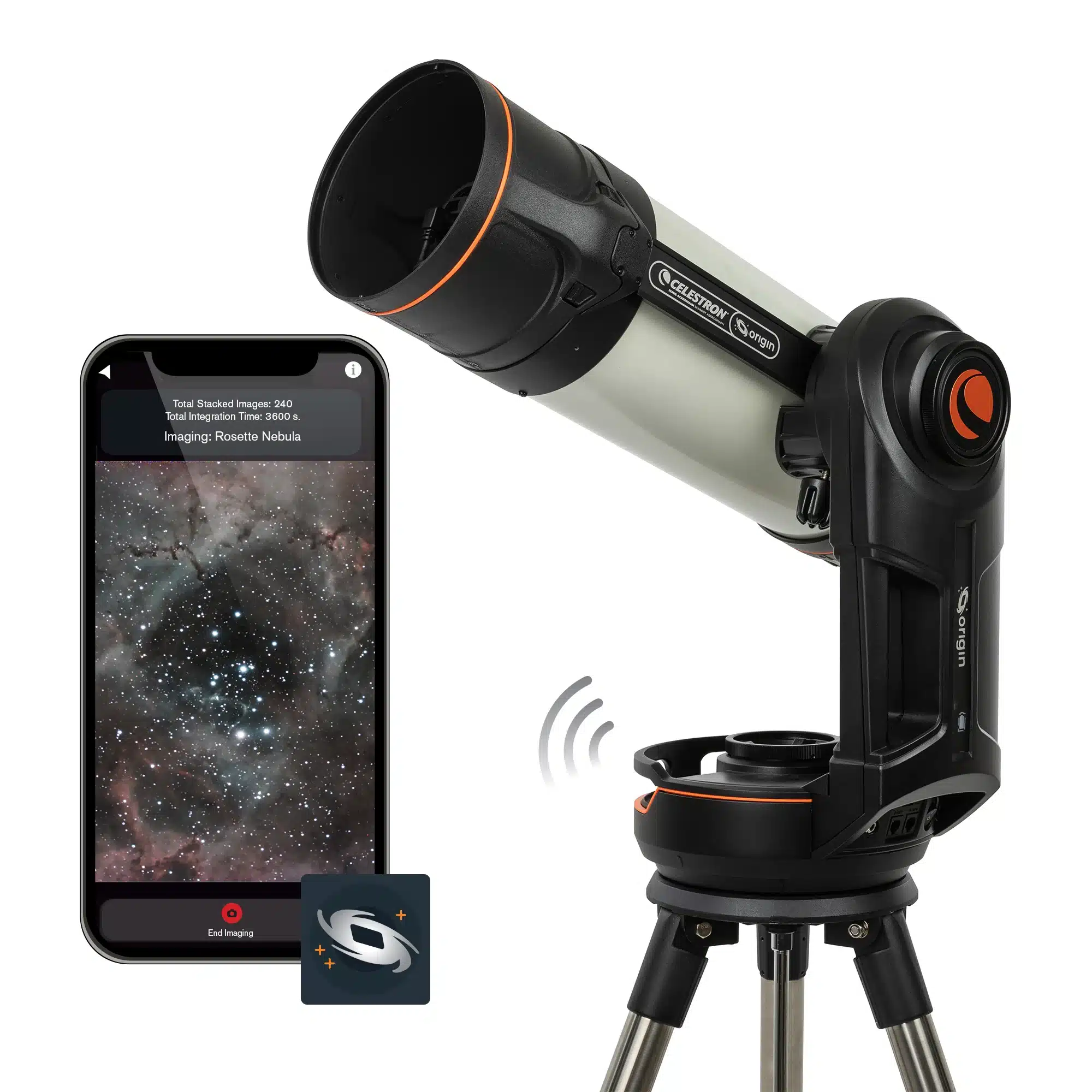
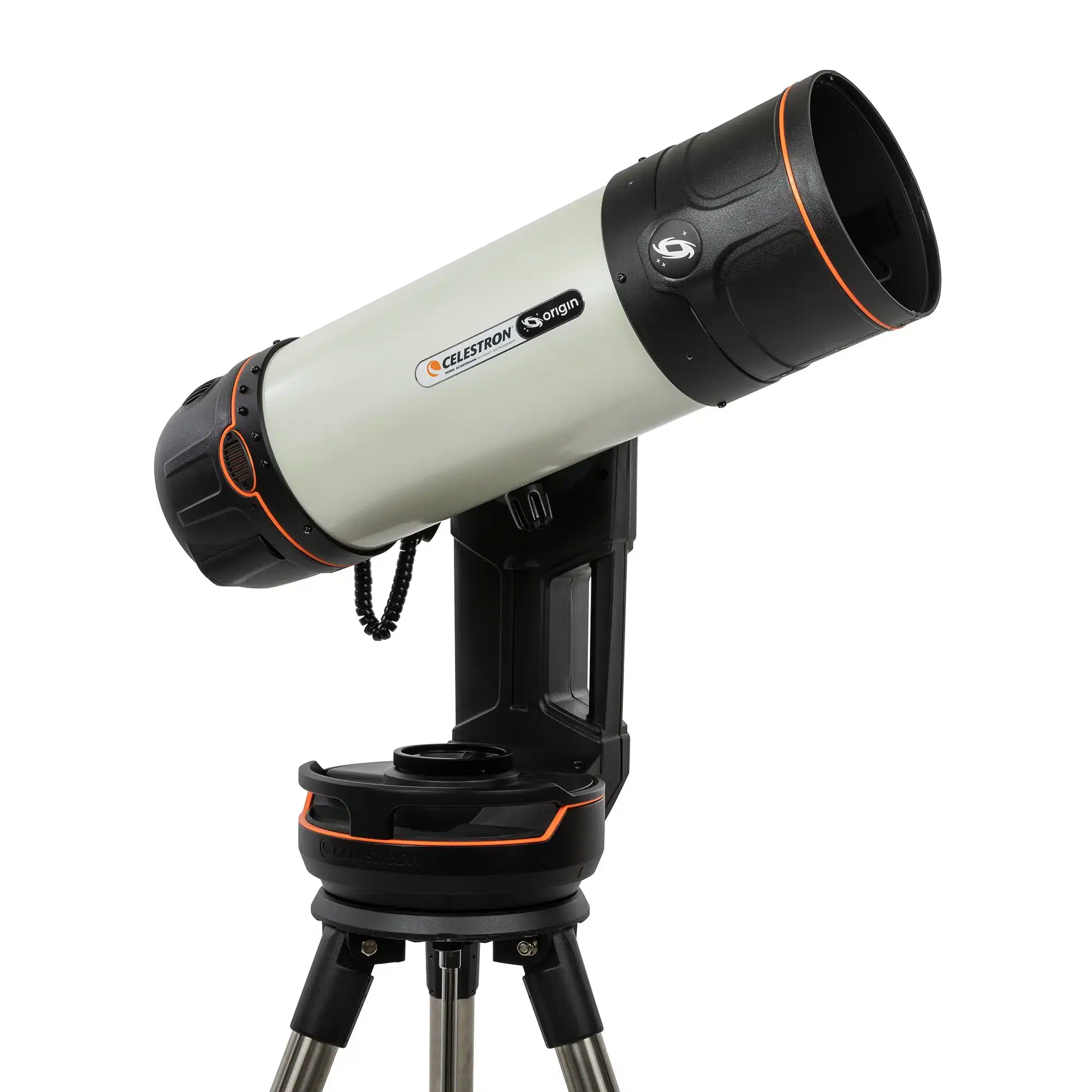
Celestron Origin Mark II stands at the forefront of a new era in amateur astronomy, blending stargazing and astrophotography into a single, user-friendly experience. This all-in-one home observatory takes the complexity out of traditional telescopes, transforming your garden into a gateway to the cosmos. 2.0μm 3856p 8.4mp – Note this lens is faster (than f/5) at f/2.2
- Are You Visiting Our Store? CLICK HERE For Today's Availability
- Delivery or Click n Collect
- 28 Days Returns Policy
Celestron engineers drew on their decades of expertise while designing every detail, from Origin’s patented optical technology to its intuitive companion app. The result is a revolutionary new system that builds on Celestron’s legacy and makes astronomy more accessible, exciting, and fun than ever before.
At the heart of Celestron Origin Mark II lies the patented Rowe-Ackermann Schmidt Astrograph (RASA)—a landmark advancement in optics. In the RASA design, the imaging sensor lies at the front of the telescope tube, not the back, creating an ultra-fast f/2.2 system with an extraordinarily wide field of view while providing sharp images to the edge. Since it launched in 2014, RASA technology has become the go-to choice for space surveillance and satellite tracking. National defense contractors, professional research astronomers, and governments trust RASA to detect tiny pieces of debris and space junk, keeping our vital communications satellites safe in orbit. For Origin, Celestron’s optical engineers developed a brand-new 6” RASA with all the same capabilities of an observatory-grade instrument in a grab-and-go package.
Thanks to RASA, Celestron Origin Mark II is in a class of its own, far outperforming other telescope designs. RASA simply delivers more photons in less time than a smaller and slower Newtonian reflector, refractor, or other entry-level telescope tube. RASA’s unique combination of speed, aperture, and performance ensures unparalleled image detail, even during short exposure times.
Now Equipped with the Celestron Origin 678C Camera
Celestron Origin Mark II now comes equipped with the Origin 678C Camera—a next-generation upgrade featuring Sony’s latest Starvis 2 CMOS technology. With 8.4 megapixels, ultra-fine 2.0 μm² pixels, and a modern 16:9 aspect ratio, this advanced sensor delivers higher resolution and increased sensitivity.
Precision-matched to Origin’s fast f/2.2 RASA optics, the 678C Camera captures fine structure in galaxies, nebulae, and star clusters. Whether you’re new to astrophotography or an experienced imager, you’ll enjoy clean, crisp results—ready to stack, share, or admire on your device in near-real time.
Turning Every Backyard Observer into an Astroimager
Celestron Origin Mark II introduces a paradigm shift in astrophotography with its built-in AI algorithms. As the telescope captures data, these intelligent algorithms automatically process every frame in real time. It’s important to note that the AI imaging processing in the Origin app is not generative AI. It does not colorize or add to your image data in any way. It simply sharpens and enhances your images using the same processing techniques an advanced astroimager would use.
The images you create with Celestron Origin Mark II are 100 percent your own data, optimized to look its best. The technology works in real-time on your live-stacked images and is also applied to the final stacked master. The result is a breathtaking display of celestial objects, rich with color and detail beyond what the human eye could perceive in an eyepiece. And you can always adjust the images yourself using the manual controls. Thanks to the Celestron Origin Mark II, astroimaging is now accessible to enthusiasts of all skill levels, including those who have never used a telescope before.
A Universe at Your Fingertips: StarSense Technology & the Origin App
Setting up Celestron Origin Mark II is a snap, thanks to its automated initialization process powered by StarSense technology. Place Origin outside, turn it on, and connect to the app. Then, you can choose to remain with your telescope or head indoors. In less than two minutes, Origin focuses itself, scans the night sky, autonomously aligns itself by matching star patterns overhead to its internal database, and notifies you that it’s ready to begin your astronomical adventure.
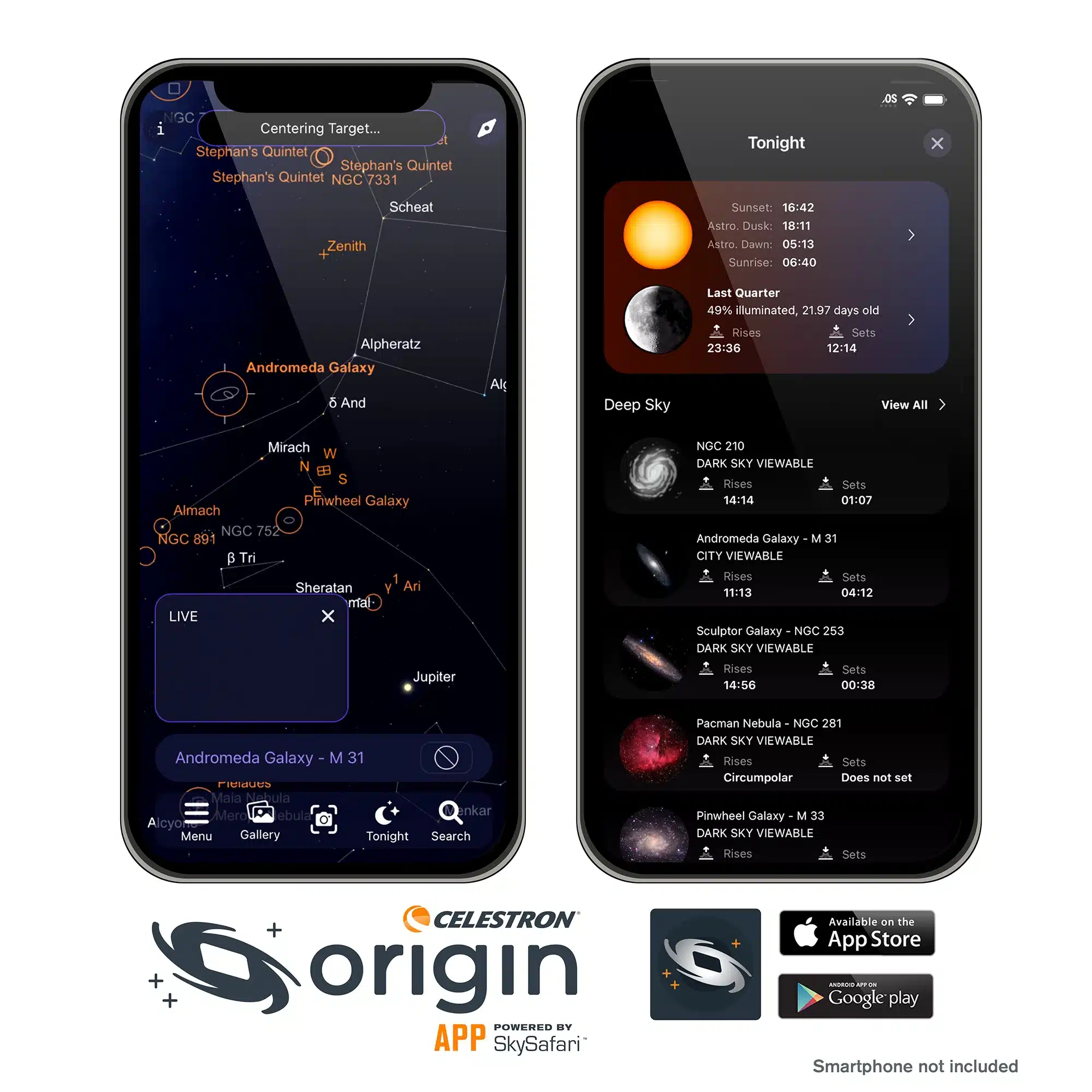
The Celestron Origin Powered by SkySafari™ app, developed in collaboration with Simulation Curriculum offers an intuitive planetarium interface that simplifies navigation through the night sky. Using the planetarium view, hold your device up to the sky to look around using “compass mode”, and tap on any object you want to see (the best ones are highlighted). Or try the Tonight’s Best list, where Origin displays all the most impressive galaxies, nebulae, star clusters, and more—based on your precise location and observing time. Forget about consulting a star chart or planning ahead; Origin is ready to show you the universe whenever you are.
Apple iOS Download
Google Play Download
Once you’ve chosen a target, Celestron Origin Mark II centers it precisely in the field of view. Switch to the camera view and press Start Imaging to begin capturing 10-second exposures. It’s that easy! You see the results come through in real-time as the target takes on more and more detail. As the Celestron Origin Mark II works, it continually tracks the sky and adjusts its built-in dew prevention system to keep your images razor-sharp. Using the Celestron Origin app, you can easily adjust image settings — such as brightness, contrast, and color saturation — to bring out different details before saving or sharing with family and friends. As of 2025, the Celestron Origin Mark II can adjust the Stretch Strength in your final stacked master to tease out subtle details in faint nebulae and galaxies.
A Shared Cosmic Experience
Gone are the days of waiting in line to peer into an eyepiece. Celestron Origin Mark II fosters a sense of community as you share the awe-inspiring experience of exploring the night sky together. Whether your friends and family are in the same room or gathered outside, multiple people can connect to Celestron Origin, and stream the view with their own devices. Additionally, Celestron Origin Mark II allows you to cast the live feed to your smart TV or instantly save and share your astroimages, creating memorable moments beyond the confines of your backyard.
Ready for More? Advanced Features
As you grow in the hobby alongside Celestron Origin Mark II, it will continue to support you with more advanced features and functionality. For example, Origin has a built-in filter drawer that accepts standard 1.25” and 2” format filters. This allows you to install optional filters, which can be especially useful in imaging nebulae in light-polluted environments like the typical suburban backyard. For imaging broadband objects like galaxies and star clusters or objects from dark skies, remove the filter for more light-throughput and brighter images. Experiment with removable and interchangeable filters for results you can’t achieve with other systems’ fixed filters.
If you would like to try advanced image processing, Celestron Origin Mark II again has you covered. It can automatically save all your raw images, which you can retrieve by plugging in a USB thumb drive or by connecting to Origin’s built-in WiFi network to download the files to your computer wirelessly. Then, import them into your favorite software for manual editing and stacking.
And how about putting Origin to work for you while you sleep? That’s no problem with the scheduled observations feature. Just tell the app which objects you want to capture. You’ll wake up to an array of spectacular images.
Expand Your Astroimaging Possibilities with Celestron Origin
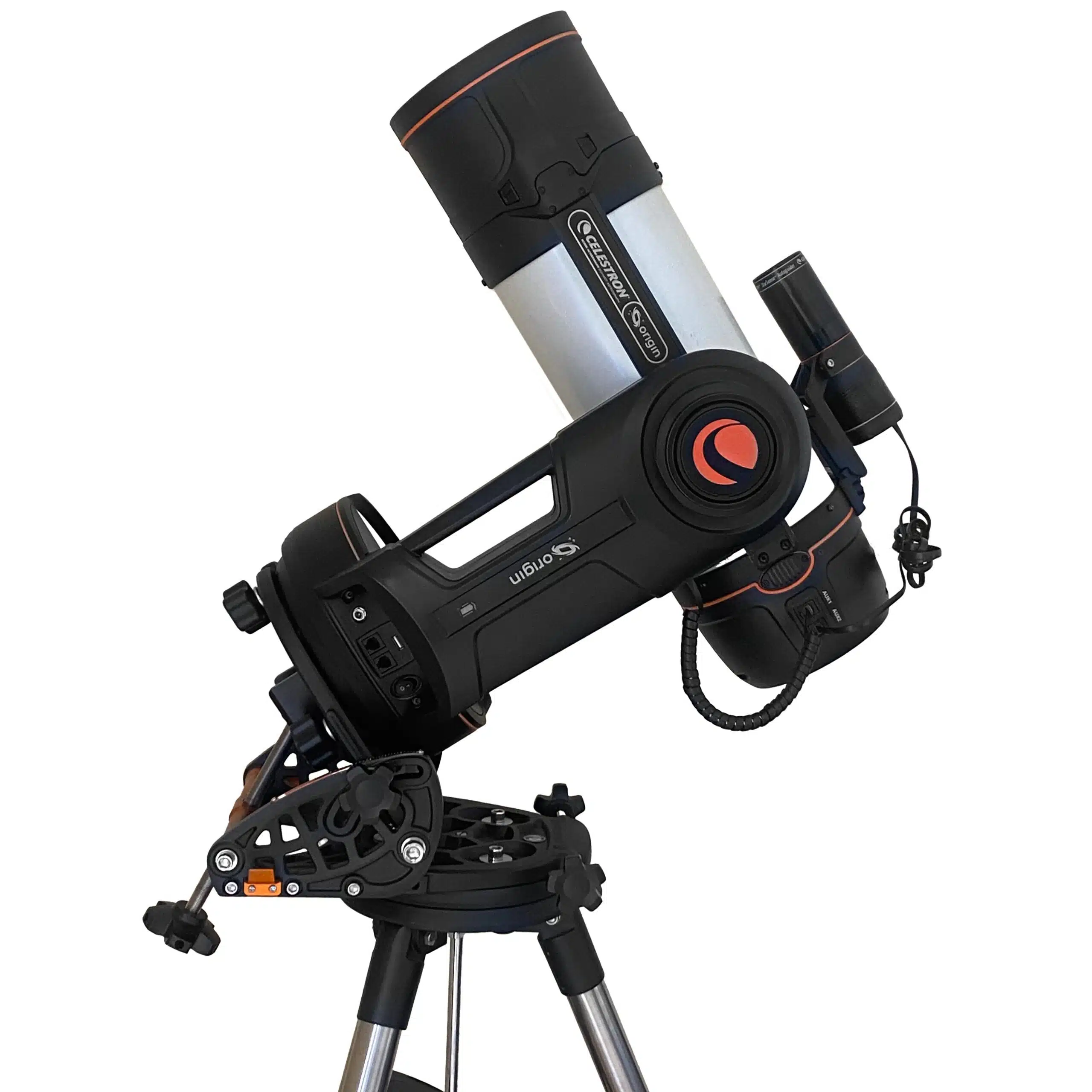
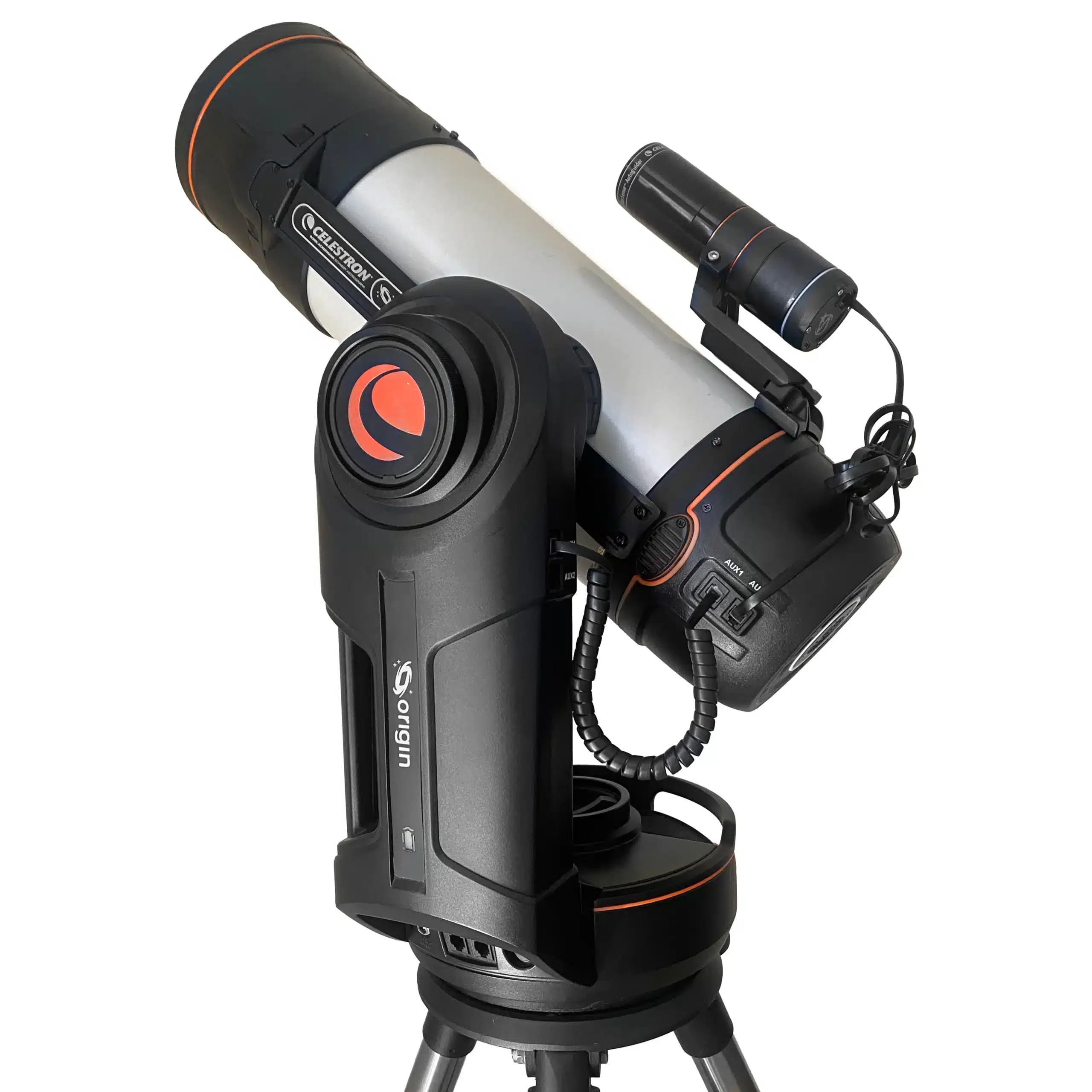
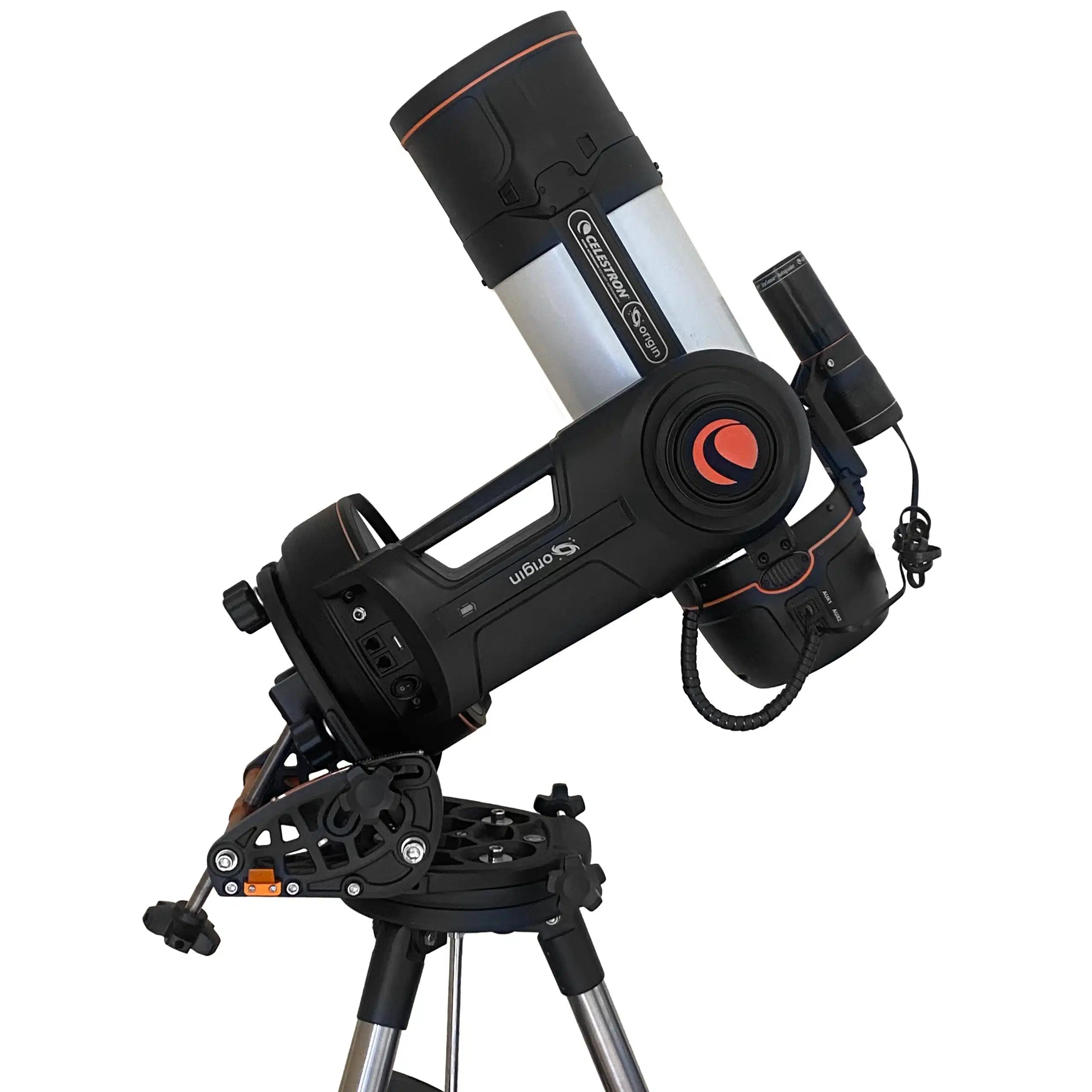
Celestron Origin Mark II delivers stunning deep-sky images right out of the box. But for experienced astrophotographers interested in experimenting with longer manual exposure times, there’s now an exciting new way to fine-tune performance: equatorial wedge mode, enabled by the Wedge for NexStar Evolution and the optional StarSense Autoguider.
By aligning Celestron Origin Mark II with Earth’s rotational axis, the wedge eliminates field rotation during tracking. This enables longer sub-exposures and allows imaging near or at zenith—ideal for capturing fainter details with greater clarity, since zenith (straight up) is generally the darkest part of the night sky. As with any equatorial setup, polar alignment is required before use, but the app will take you through an automated routine that makes it easy.
For exposure times beyond 30 seconds, we recommend pairing the wedge with the StarSense Autoguider. While Celestron Origin Mark II excels at short exposures (10–15 seconds), automatically rejecting frames with minor tracking errors, the Autoguider boosts tracking precision for longer manual exposures—reducing rejected frames and maximizing image quality. Together, the equatorial wedge and StarSense Autoguider offer a powerful toolkit for advanced users pursuing specialized longer-exposure imaging.
Gain a New Perspective Here on Earth
In addition to revealing distant worlds, Celestron Origin Mark II can also capture incredible views of land-based objects on Earth, day or night. During the day, you can manually slew to capture landscapes and scenery. At night, Origin’s fast optics and sensitive camera allow you to see things in very dim ambient conditions for almost night-vision-like performance. Look around your yard or campsite at night to see what you may be missing!
Take Your Astroimaging Studio Anywhere
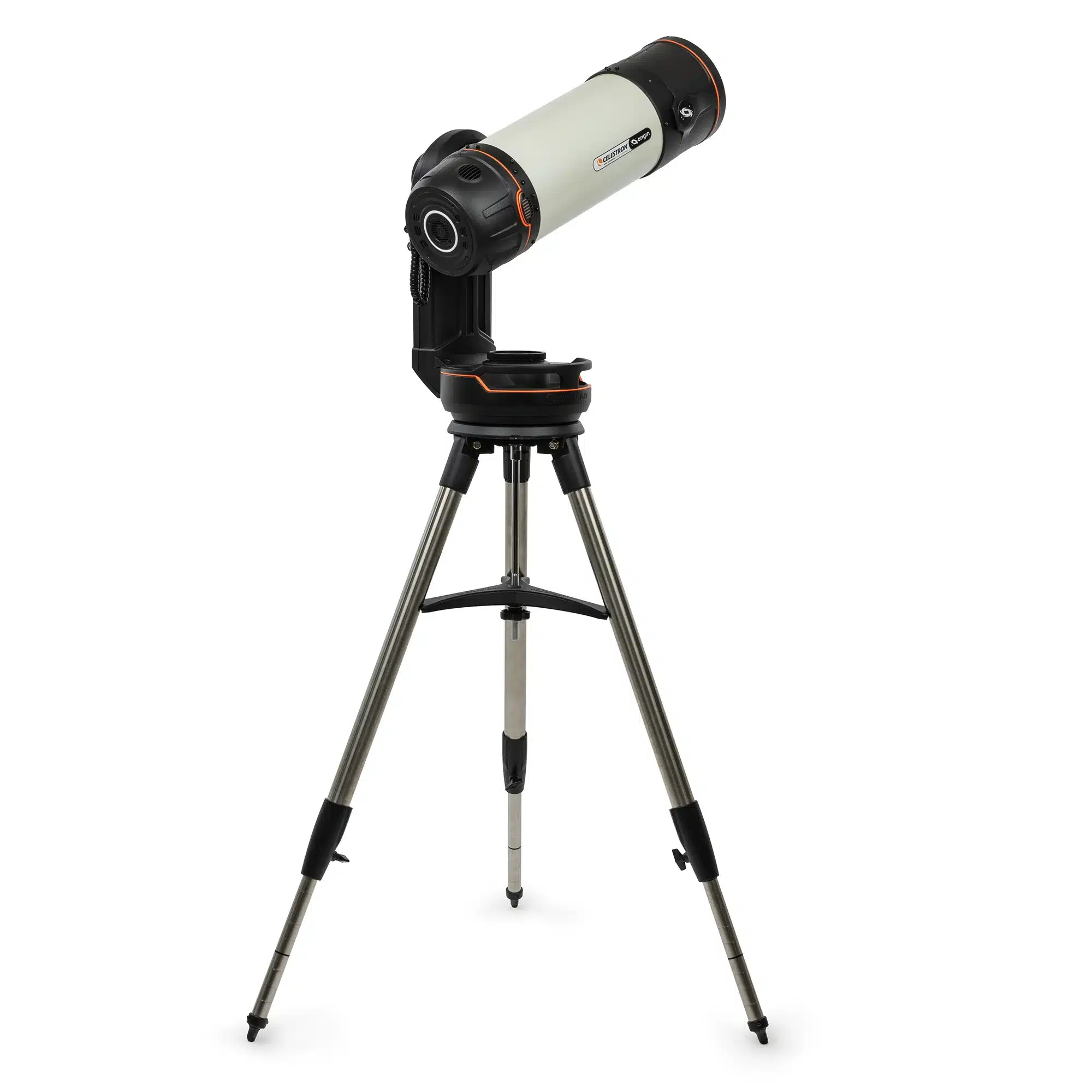
Celestron Origin Mark II is a portable system that doesn’t require external WiFi networks, so you can easily take it to remote dark skies in any car. The optical tube, mount, and tripod all easily assemble and disassemble without tools. Each component weighs less than 16 lb. Optional carry cases are also available.
Capturing New Flat Frames
Flat frames are essential in astrophotography, helping correct for dust, vignetting, and other optical imperfections—but their accuracy depends entirely on matching your current imaging setup. Any time you rotate the camera or switch to a new sensor (when it becomes available), you need a new flat to maintain calibration precision. That’s where PrimaLuceLab GIOTTO for Celestron Origin comes in. We have partnered with PrimaLuceLab to specifically design an intelligent flat field generator for the Celestron Origin that makes it easy to capture fresh flat frames whenever adjustments are made. Seamlessly replacing the standard cap, GIOTTO for Origin integrates directly with the telescope and works with the Celestron app to update your calibration with every change—ensuring you always get the sharpest, cleanest images possible.
Mosaic Mode Now Available
A useful new update for Celestron Origin users, Mosaic Mode is now available, expanding what Origin can capture beyond the camera’s standard field of view.
Users simply select the area of sky they want to image within the Celestron Origin app. Origin then divides the area into overlapping sections, captures each one automatically and combines them to create a single larger mosaic image.
This opens up the opportunity to capture larger deep-sky objects and wider areas of the night sky, adding another very useful capability to the Origin platform.
Future Upgrades
When you invest in Origin, you can count on Celestron’s engineers as your long-term partners in astronomy. Our technical teams are hard at work developing even more upgrades and enhancements for your Origin. For example, we provide access to Origin’s camera for potential future upgrades as technology improves. We’re also developing all-new functionality for your Origin and the Origin app. Here’s a sneak preview of what we’ll be rolling out in the coming months:
We’ve improved how dark frames are handled in Origin’s software to reduce residual noise and deliver cleaner images. To take advantage of this improvement, you’ll need to recapture a complete set of dark frames.
You can watch a step-by-step walkthrough in this video
Or, follow these instructions:
Place the dust cap on Origin. Move Origin to a dark location—outside at night or in a dark room or closet. If it’s not completely dark, cover Origin with a blanket. Turn on Origin and connect with your smartphone or tablet as usual. Cancel initialization if needed. In the Origin app, navigate to Menu>Settings>Advanced. Then tap “Recapture Complete Set of Dark Frames.” Origin will capture a full set of dark frames with up to 30 seconds of sub-exposure time. The process takes about 20 minutes. If you’re using the optional Equatorial Wedge and plan to take sub-exposures longer than 30 seconds, capture additional dark frames manually: In the app, enter the Dark Frame ISO and Dark Frame Exposure that match the manual camera settings you intend to use. Set the Number of Dark Frames to 10, then tap “Recapture Dark Frames.” This will take a few more minutes. If you plan to use Origin right after capturing new dark frames, don’t forget to remove the dust cap!Once the new dark frames are captured, the warning message will disappear, and your Origin will be ready to use.
NOTE: This only affects Celestron Origin users with the 178 camera, not the 678 camera used on the Celestron Origin Mark II.
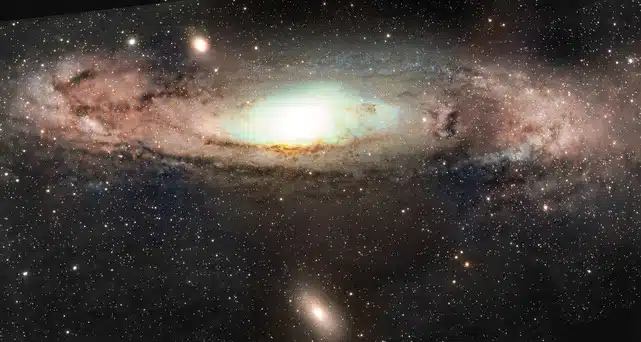
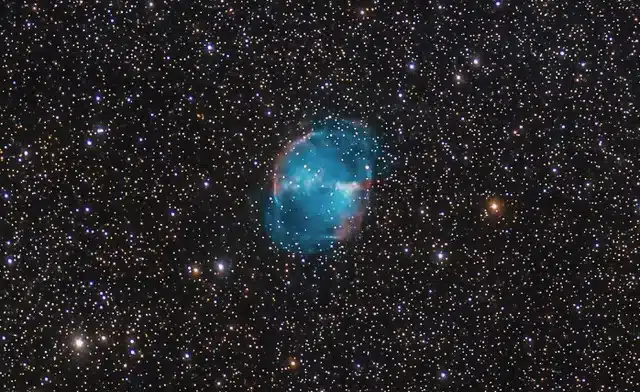
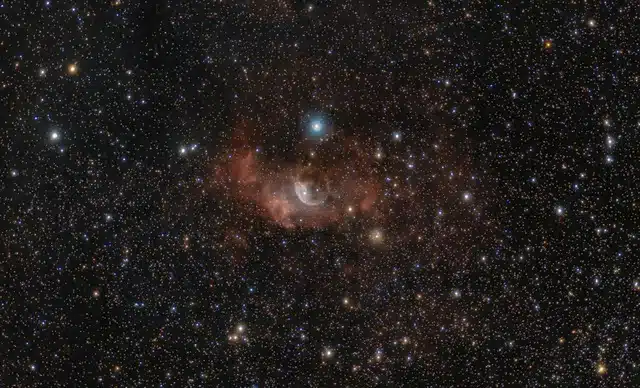
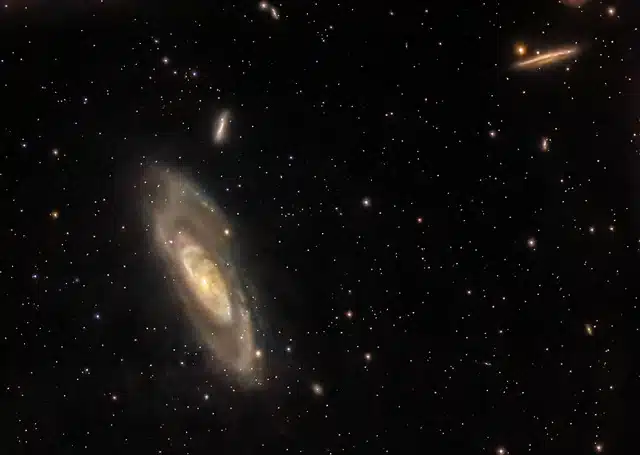
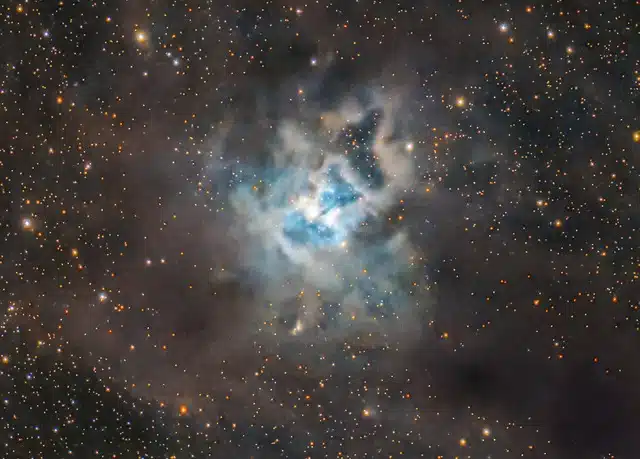
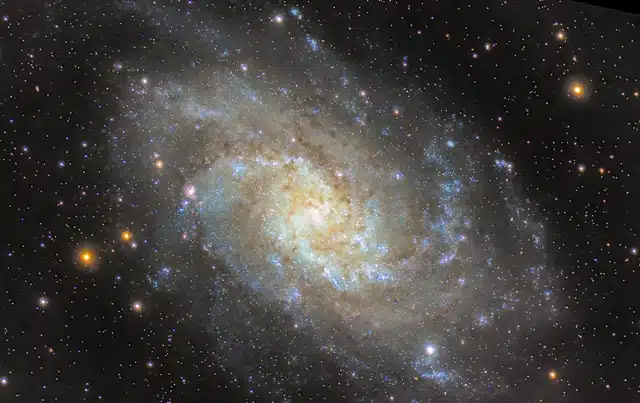
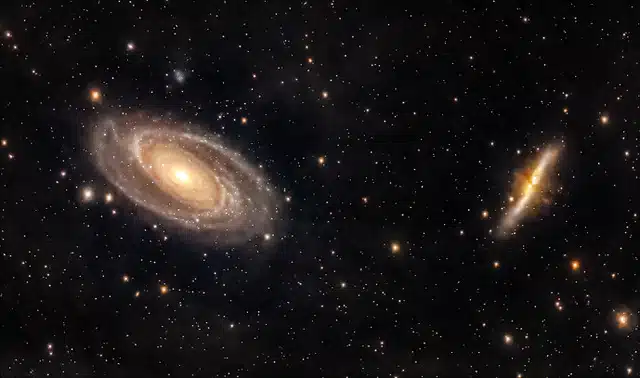
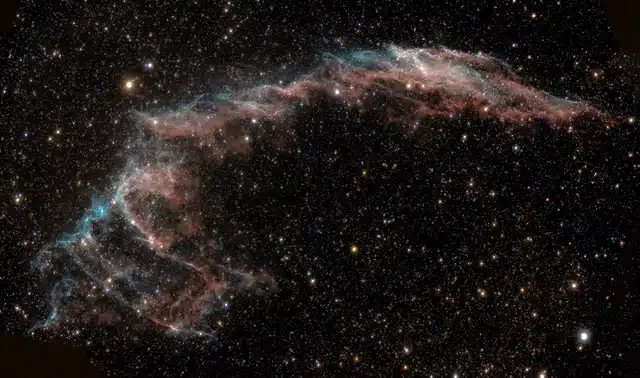
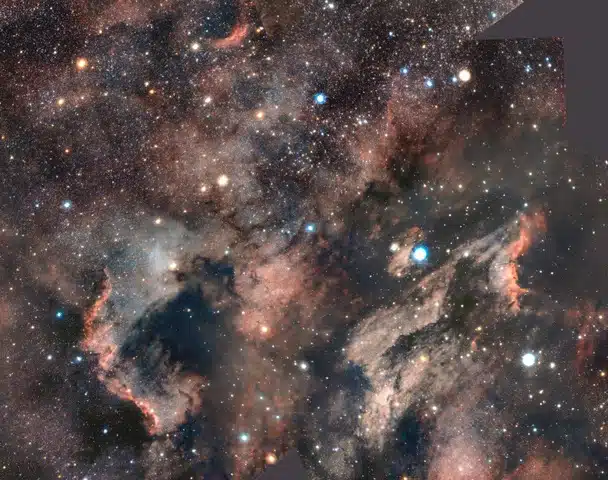
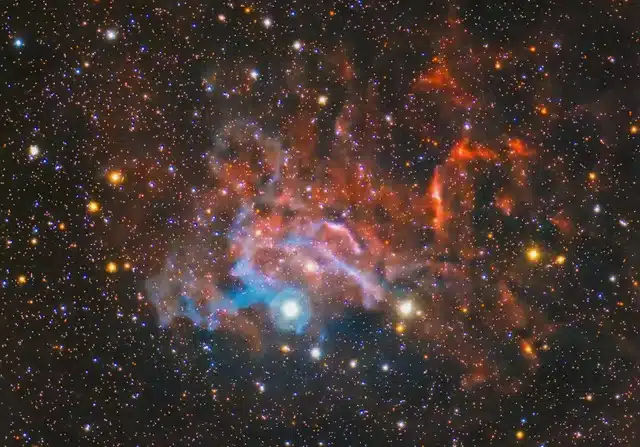
All the attached images of Space were captured by Mr John Wilson, a customer of ours. With thanks to him for sharing this: “All taken from our house on the northeast side of Stokesley. Not a particularly dark site! No filters were used and the images are from stacked .png files downloaded wirelessly from the ‘scope onto an Android tablet. Some use more than one stack, obviously the mosaics, but also occasionally I’ve stacked more than one .png of the same field using layer mixing in Photoshop. Quite a bit of post-processing is needed to brighten them and optimise the levels, plus enhancement of the colours and definition…. Other than the snapshots, they were generally in the range 15 min to 2 hours. This automated system comprises a sturdy tripod, an altazimuth mount with built-in battery and the optical tube also housing the camera. Nothing is unduly heavy and once mounted and leveled, it can be told to set itself up, once the stars come out. It takes under 20 minutes to assemble and about a minute to automatically align and focus. The mount finds and accurately tracks the object you choose. A built-in heater prevents misting of the optics. The battery pack provides a number of hours power, I generally plug in the charger for unlimited operation. The only extra needed is a compatible smart phone or tablet, I use an Android Galaxy Tab A8. Other than the occasional connection glitch, usually easily reset, the control and imaging work well over my home WiFi. The tablet screen can be mirrored on my TV. Whilst having experience in amateur astronomy, I believe that this automated observatory package is also particularly suitable for newbies. I’ve imaged planets and chased total eclipses around the world. However this product has given me fresh new familiarity with deep sky objects – nebulae and galaxies. Coupled with a good planetarium app like Stellarium, the automation makes it quick and easy to explore the night sky. Many fantastic targets are programmed in, but quickly it is a temptation to go ‘off-piste’ and seek out fainter or less well known objects, or to build up mosaics of wider areas. This product is designed specifically for deep sky astrophotography, a job it does exceptionally well, even from light polluted sites. The images are the best I have seen from the other similar systems currently available, after a bit of simple image enhancement using the free Photoshop app. Time exposures range from minutes to hours, depending on how ambitious you want to be. It can, however, take ‘snapshots’ of brighter objects like the moon and planets. Don’t expect large images with high resolution. It will show the phases of Venus and the main cloud bands and 4 Galilean moons of Jupiter. The moon fills slightly more than half the field of view and the craters show up great. It is not a budget purchase, but I consider it excellent value considering its ease of use and quality. For an elderly person, with limited mobility, it opens up infinite realms to explore from a comfortable warm seat indoors. A few hours of imaging provide sufficient data for many happy hours of image editing.”
Features
Specifications
| Optical Design: | Rowe-Ackermann Schmidt Astrograph |
| Aperture: | 152mm (5.98″) |
| Focal Length: | 335mm (13.18″) |
| Focal Ratio: | f/2.2 |
| Optical Coatings: | StarBright XLT coatings throughout |
| Central Obstruction Diameter: | 63mm (2.48″) (41% of aperture diameter) |
| Light Gathering Power (Compared to human eye): | 474x |
| Image Resolution: | 1.48 arcsec/pixel |
| Dovetail: | CG-5 Dovetail Bar |
| Filter Drawer: | Integrated, accepts 1.25″ or 2″ astroimaging filters |
| Imaging Sensor Info: | |
|---|---|
| CMOS Image Sensor: | Sony IMX678-AAQR1, color, back-illuminated |
| Sensor Size: | 8.9mm (0.35″) diagonal |
| Pixel Size: | 2.0μm x 2.0μm |
| Number of Effective Pixels: | 8.3M (3856 x 2180) |
| Field of View: | 1.32° x 0.75° |
| Integrated Electronics Info: | |
| Onboard Computer: | Raspberry Pi 4 Model B |
| Mount: | Computerized GoTo altazimuth mount |
| Dew Prevention: | Fully automated heating element integrated into front lens, removable dew shield/lens shade |
| Focus Motor: | Autofocus or manual control |
| Cooling Fans: | One (1) fan for optics, one (1) fan for electronics, both pull air through vents with wire mesh |
| LED Status Ring: | Indicates status “at-a-glance” |
| Ports Info: | |
| USB-A: | Two (2) on optical tube for accessing raw image files for external processing, one (1) on mount for mobile device charging only |
| Ethernet: | One (1) on optical tube |
| Auxiliary Ports: | Two (2) on optical tube, four (4) on mount |
| Power Info: | |
| Battery: | Integrated LiFePO4, 97.9 Wh, capable of 6+ hours of use |
| Power Input: | 12V DC adapter for charging internal battery or running on external AC power |
| User Interface Info: | |
| Celestron Origin App: | Runs on compatible iOS or Google Play smartphones and tablets |
| System Requirements: | iOS 16 or higher, Android 12 or higher |
| Dimensions: | |
| Optical Tube: | 609.6mm x 177.8mm (24″ x 7″) diameter |
| Mount: | 457.2mm x 304.8mm x 254mm (18″ x 12″ x 10″) |
| Tripod (Collapsed): | 330.2mm x 304.8 x 812.8mm (13″ x 12″ x 32″) |
| Assembled System: | 609.6mm L x 660.4mm W x 1219.2mm H (24″ L x 26″ W x 48″ H) |
| Weight: | |
| Optical Tube: | 10.6 lb (4.8 kg) |
| Mount: | 17 lb (7.7 kg) |
| Tripod: | 14 lb (6.35 kg) |
| Total System: | 41.6 lb (18.87 kg) |
What is in the Box
- 6″ RASA optical tube with integrated camera
- Origin single fork-arm mount with internal lithium battery
- Built-in computer with cooling fans and WiFi
- Autofocuser
- Dew prevention system with environmental sensor, dew heater ring, and dew shield
- Integrated filter drawer
- Full-height tripod
- Lens cap
- AC charger
Accessories We Recommend


In Stock For Delivery

Reviews
Sorry, no reviews match your current selections

